Videos — Sacadas De La Deep Web
an early stage Building Information Modeller
for the rest of us, mere mortal architects
a little bit goes a lot further
It is free.
Download now!
an early stage Building Information Modeller
for the rest of us, mere mortal architects
a little bit goes a lot further
Have you walked away...
TAD originated at a small architect's office in India in 1989. It is a different approach to BIM (Building Information Modelling) from what you may have seen elsewhere. It is based on fundamental architectural research. It is not a software
that was derived from other engineering fields and then modified to suit architects.
Since it is so much in touch with what architects really do, it is extremely efficient in doing it. The file-sizes of this BIM software are literally in kilobytes.
At the same time it has extensive querying capabilities. The architect can actually get objectivity from quite early on -- almost from the bubble-diagramming stages. For example; quantities, area calculations, municipal (local government)
calculations and so on. Such capability can even be extended using add-ons (probes)
I know the TAD system quite well, and it is an improvement on BIM in that in enables imprecise models to be represented to a far greater extent than BIM does. This is not surprising, since TAD is actually developed for architects and for architectural design, while BIM is developed for the AEC industry broadly and is now essentially a standard (via IFCs) for the industry and architects use it for design for reasons of productivity (for the same bad reason that they were consumers of AutoCAD back in the day).

When designing, we need to be in touch with the various spaces we use. After all, we are not termites -- who live inside built matter of the walls. An architect is quite interested in knowing how the spaces are inter-related, and whether they
would work for our users. The walls come as a bye-product of having made these spaces.
TAD respects such an approach. That is why it is very easy to start designing directly in TAD itself. It is like having a scratch pad handy.
But if you think this is just a bubble diagramming too ... well, it is not. You can even create the entire model; including the built matter that is present in the building.
What it does NOT do is drafting. For that, you can easily export from TAD and use the regular CAD software that you were using earlier.
The adjoining photo shows the internal stack through the tiny row-house.
The west wall has a bit of glass blocks. It not just lights up the space
but it drives the air inside the stack. This is a intricate vertical space
that goes through the row house to provide ventilation -- all modelled
inside TAD
TAD helps you iteratively design. Like a potter at work. At any point in time, you can extract objective information such as areas, distances and so on. What is the point of designing a building only to realize at the final stages that some
mathematical criteria was not right?
This capability of querying into the design is very powerful. TAD has a built in language called "ARDELA" (ARchitectural DEsign LAnguage) That can be used to create add-ons to provide additional querying functionality. These add-ons probe into
your model and provide you answers.
We would be releasing a marketplace for these probes -- and also a simple way for you to write your own probes too
The adjoining photo, a small gazebo kind of space was carved out on the
terrace on one part of the split-level in the rowhouse. An ARDELA area
add-on (probe) did all the calculations. We were then confident that we
can get that semi-enclosed space, without it being counted by the municipality
(in India, these area calculations are known as FSI calculations)
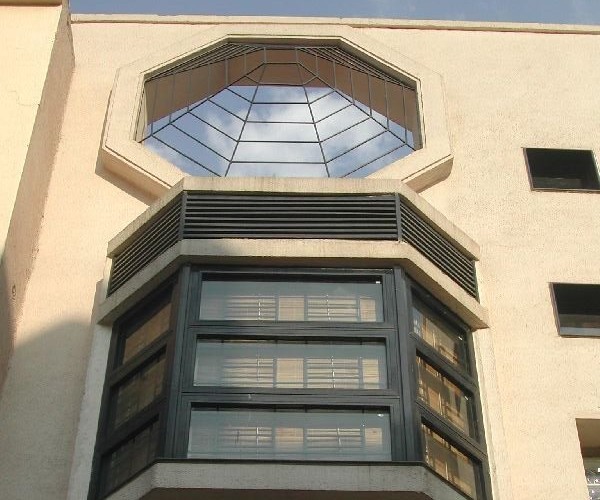
Over 3 million of actual built projects done over last 30 years. (From the office that created TAD) Scores of unbuilt ones
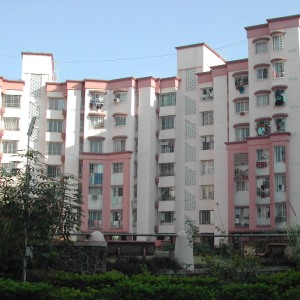
Nerul, Navi Mumbai, India
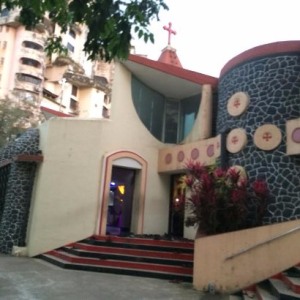
Nerul, Navi Mumbai, India
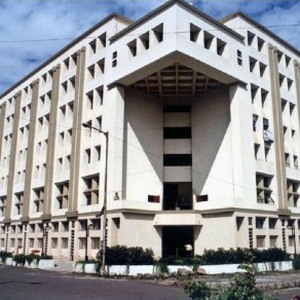
Nerul, Navi Mumbai
El contenido no moderado puede mostrar crudeza real que nadie debería presenciar por "entretenimiento". 4. ¿Cómo consumir este contenido de forma segura? Si te gusta el horror analógico
From a technical standpoint, the dark web is a terrible place to host or watch videos.
Quienes han navegado la Dark Web con fines de investigación académica o periodística coinciden en algo: la experiencia real dista mucho de las historias de terror de YouTube.
Human curiosity is naturally drawn to the forbidden. The label "found on the deep web" automatically adds an aura of danger, exclusivity, and authenticity to any piece of media, making viewers more likely to click and share. The Aesthetic of Creepiness videos sacadas de la deep web
Filmmakers who wish to showcase their work without the constraints of mainstream film industry standards often turn to the deep web. These videos can range from experimental art projects to indie films that push the boundaries of conventional storytelling.
Antes de adentrarnos en el contenido de los videos, es crucial aclarar la diferencia entre estos dos términos, que a menudo se usan de manera incorrecta como sinónimos. La se refiere a cualquier contenido en línea que no es indexado por motores de búsqueda como Google, ya sea porque está protegido por contraseñas, detrás de muros de pago, o es simplemente contenido dinámico que los buscadores no pueden rastrear. Acceder a la Deep Web no requiere nada más que el navegador que usas a diario. De hecho, accedes a ella cada vez que revisas tu correo electrónico, ingresas a tu perfil de banco o entras a una página interna de tu trabajo. En su mayor parte, es un espacio legal y seguro.
In summary, "videos sacadas de la deep web" represent a broad spectrum of content. For the average person, most of the videos seen on social media are exaggerated or fabricated creepypasta. However, the genuine content hidden in the darkest recesses of the internet is profoundly disturbing and illegal. El contenido no moderado puede mostrar crudeza real
The Digital Underground: Understanding "Videos Sacadas de la Deep Web"
Many "disturbing" videos are actually student films, 1990s experimental performance art, or abandoned analog horror projects. Stripped of their original context, they look terrifying.
Si navegas por los rincones más oscuros de YouTube o foros de discusión, es probable que te hayas topado con listas de reproducción tituladas "Videos aterradores encontrados en la Deep Web" o "Archivos perdidos de la red oscura" . Estas compilaciones suelen acumular millones de visitas, alimentadas por nuestra fascinación morbosa por lo desconocido. Si te gusta el horror analógico From a
La recomendación de los expertos en ciberseguridad es clara: no entrar a la Deep Web por curiosidad. El riesgo de ser víctima de una estafa, infectar tu dispositivo con malware o toparte con contenido ilegal es demasiado alto. La próxima vez que veas un video viral que asegura provenir de la "Deep Web", recuerda que lo más probable es que no sea más que una leyenda urbana digital, o peor aún, la evidencia de un crimen real que es mejor dejar en manos de las autoridades. La fascinación por el abismo puede ser peligrosa, y en el caso de la web oscura, mirar al abismo puede significar que el abismo también te mire a ti.
Las fiscalías de todo el mundo están intensificando sus esfuerzos para perseguir estos delitos, incluso cuando se cometen bajo el anonimato de la Dark Web. Las condenas pueden incluir penas de prisión de varios años y multas sustanciales.
Contrario a la creencia popular, la Deep Web no nació como un refugio para criminales. A finales de la década de 1990, . Esta tecnología evolucionó hasta convertirse en Tor, cuyo código fue liberado al público en 2002 con el apoyo financiero del gobierno estadounidense, con el objetivo de proteger la privacidad de ciudadanos comunes, activistas y periodistas en países con regímenes represivos.

For far too long, we architects have not asked ourselves how we may do a better job in this world. Instead we just relied on some outside expertise and hand-me-downs. Let us rise and think for ourselves.