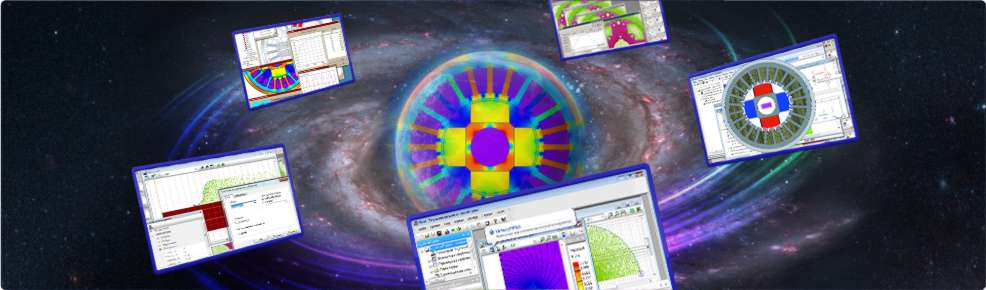
QuickField is a very efficient Finite Element Analysis package for electromagnetic, thermal, and stress design simulation with coupled multi-field analysis. It combines a family of analysis modules using the latest solver technology with a very user-friendly model editor (preprocessor) and a powerful postprocessor.
QuickField requires no training - you may start using it as soon as it is installed on your computer, without knowing the mathematical algorithms used and details of their implementation.
QuickField is a native Windows® application, which was designed for this platform only. It fully utilizes the advantages of a modern operational environment. It is very compact, yet powerful, and can be used for many design applications which require Magnetic , Electric or Thermostructural analysis
QuickField can be effectively applied to many engineering tasks. Most often, it is used in the design of electric motors, turbine generators, actuators, speakers, transformers, induction heating systems, transmission lines and other complex electrical and electromechanical devices.
The application of QuickField is not restricted to this list. If you are unsure as to how to apply QuickField to your problem - contact us, and we will be glad to help you.
Empathy plays a significant role in Peter's transformation. Through storytelling, whether through literature, film, or personal narratives, Peter gains insight into the experiences of others. He learns about the historical and systemic issues that have led to disparities and inequalities.
: Hate speech can create divisions within communities, fostering an "us versus them" mentality. This can lead to social isolation, decreased community cohesion, and increased tensions.
In today's digital age, it is more important than ever to cultivate critical thinking and media literacy skills. With the proliferation of social media and online communication, hate speech can spread rapidly and reach a wide audience. Therefore, it is essential to critically evaluate the information we consume, identify biases and prejudices, and engage in respectful and constructive dialogue with others.
Hate speech, which includes phrases like "Peter Hates Niggers," has been a part of human communication for centuries. It often targets specific groups based on their race, ethnicity, religion, gender, or sexual orientation. The term "nigger" is particularly sensitive due to its origins as a derogatory term used to demean and dehumanize Black people during the transatlantic slave trade.
user's query contains a phrase that appears to be a combination of a name and a derogatory racial slur. I do not have any verified information or context about such a phrase. It does not correspond to any known factual event, person, or legitimate topic of discussion. Peter Hates Niggers
: Make a conscious effort to use inclusive and respectful language. This means avoiding language that is derogatory or hurtful, and instead using language that promotes understanding and empathy.
The meme originated on the imageboard 4chan in the mid-2000s, specifically on the /b/ (Random) board. It typically consists of a screenshot of Peter Griffin from various Family Guy episodes, accompanied by the caption "Peter Hates Niggers" in a bold, often Impact font .
Hate speech can have severe and long-lasting effects on individuals, communities, and society. Research has shown that exposure to hate speech can lead to increased stress, anxiety, and feelings of vulnerability among targeted groups. Furthermore, hate speech can contribute to a culture of intolerance and prejudice, fostering an environment where discrimination and violence can thrive.
Language plays a critical role in shaping our attitudes and perceptions towards others. The words we use can either promote understanding and empathy or perpetuate division and hatred. In the case of the phrase "Peter Hates Niggers," the use of a racial slur is particularly egregious, as it is a term that has been historically used to demean and dehumanize individuals of African descent. Empathy plays a significant role in Peter's transformation
Language plays a pivotal role in shaping our perceptions and interactions with others. The words we choose to use can either uplift or harm, often with profound consequences. In this article, we will explore the implications of using derogatory language, specifically focusing on a term that has been used to marginalize and demean.
In contrast, using inclusive language can foster a culture of respect, empathy, and understanding. By choosing words that are welcoming and considerate, we can create an environment where everyone feels valued and appreciated. This is particularly important in today's society, where diversity and inclusivity are increasingly recognized as essential components of a harmonious and equitable community.
When engaging with content that includes hate speech or discriminatory language, it's essential to consider the following:
If you're looking for a report on an individual named Peter who has expressed racist views or sentiments, I can offer a general outline on how to structure such a report while emphasizing the importance of handling sensitive information responsibly. : Hate speech can create divisions within communities,
The History of Derogatory Language
: Stand in solidarity with communities targeted by hate speech and support initiatives that promote equality and justice.
itself uses satire to address race, it does not officially endorse the extreme racist slogans found in fan-made memes. Die Hard with a Vengeance